
Bring an old lawn back
Lawn Renovation & Overseeding in Hartford, CT
From thickening a tired lawn to starting over, with seed blends suited to valley sun and shade.
- No-charge visit, then a written quote
- Seed mix matched to the sun, shade and soil on your lot
- Grading, seeding and erosion control from one crew
Fixing a Lawn That Has Thinned Out
Lawn renovation and overseeding are how we bring back tired lawns in Hartford neighborhoods without always tearing everything out. Lots of lawns around the city and in the older inner suburbs have been in place for decades. Trees have grown and shaded them, the soil has packed down under foot traffic and mowers, and the original grass has given way to crabgrass, clover and bare patches. Depending on how far gone a lawn is, we either overseed what is there, repair specific damaged areas, or strip it and start over.
Overseeding
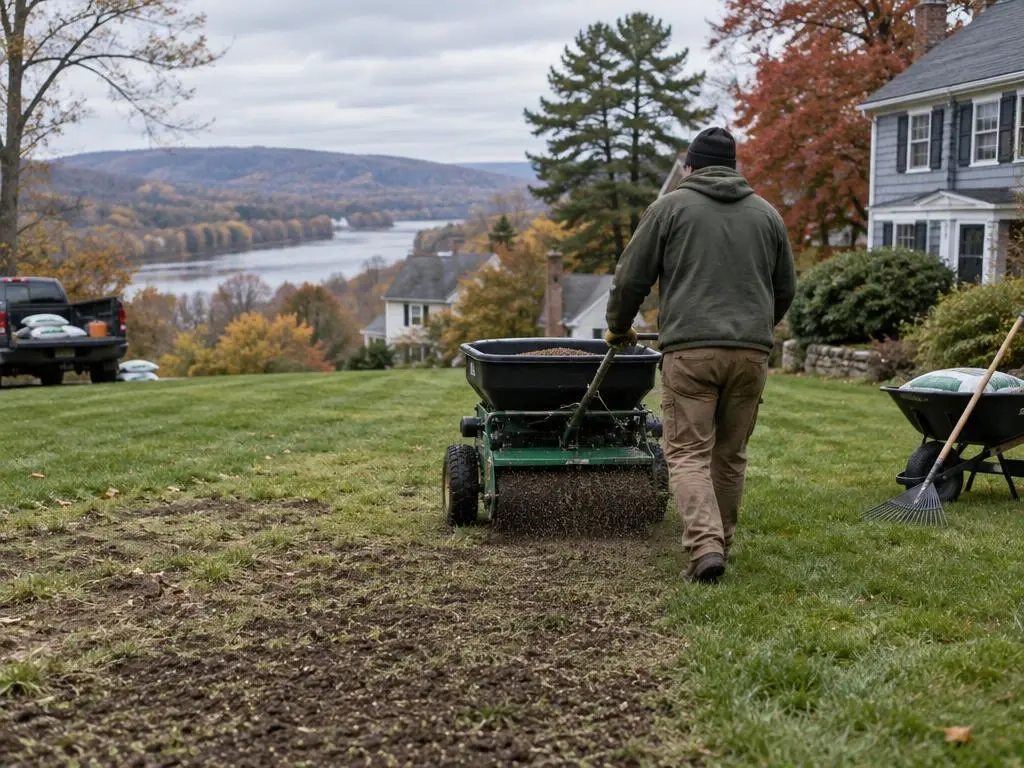
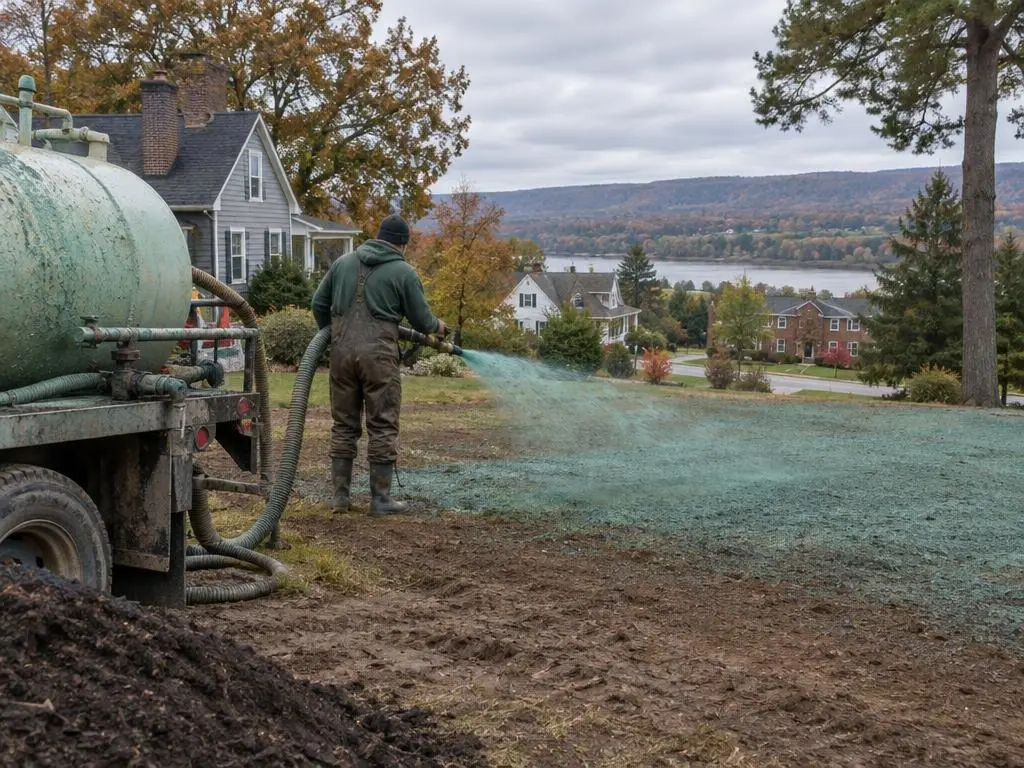
Overseeding means adding new seed into an existing lawn to thicken it. It works when at least half the lawn is still decent grass. We usually core aerate first, pulling small plugs of soil so seed, water and air can reach the root zone, and then apply seed so it lands in the holes and on bare soil. Hydroseeding over an aerated lawn works well on larger areas and slopes because the fiber mulch keeps the new seed moist while the existing grass protects it.
Lawn repair
Some damage is local: a strip torn up by a sewer, water or gas line replacement, a patch where a pool or shed came out, ruts from a delivery truck, or a dog run. Lawn repair on spots like these means removing debris, loosening compacted soil, adding topsoil to bring the patch up to grade, and seeding with a blend close to what is already growing so the repair fades in after a season of mowing.
Full lawn renovation
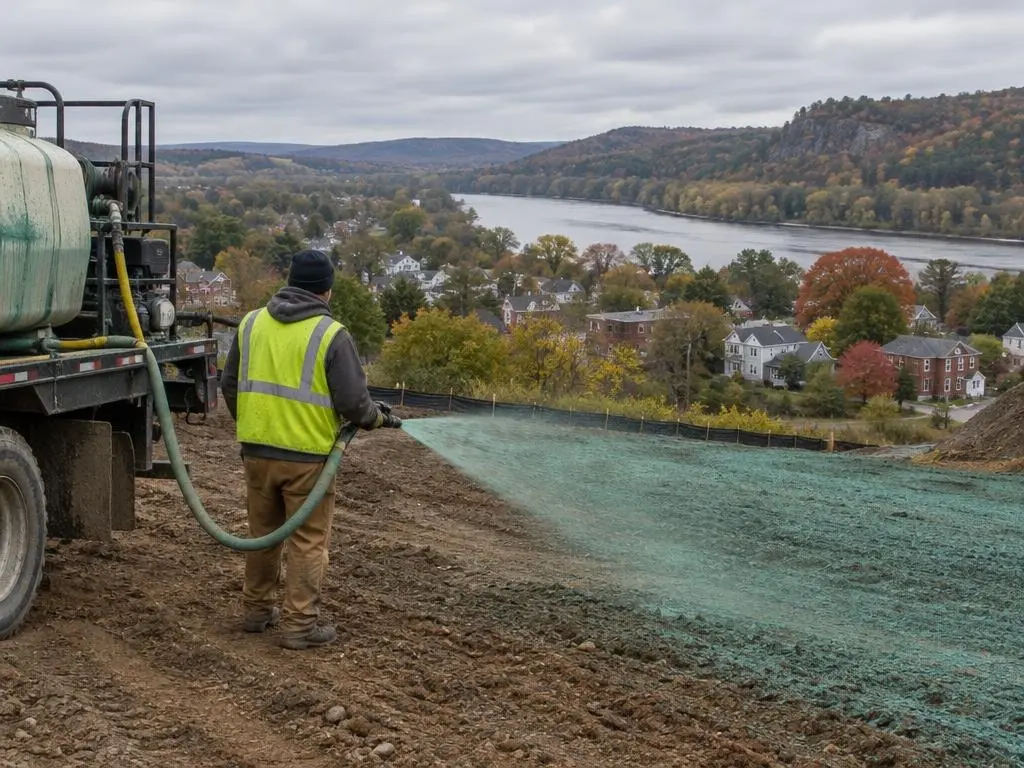
When most of the lawn is weeds or bare dirt, overseeding is like painting over rot. A full renovation strips the old turf, corrects the grade, adds topsoil where needed and hydroseeds a new lawn. It costs more up front, but it gives you a uniform lawn instead of years of patching. We will tell you honestly which approach makes sense for your yard.
Shade under old trees
The maples and oaks that shade Hartford-area streets are part of the appeal, and they are also why many lawns are thin. Grass needs light. Fine fescues tolerate shade better than bluegrass, so shaded areas get a mix weighted toward them. Raising the canopy with selective pruning helps too. Under heavy shade with surface roots, though, no lawn stays thick, and a mulched bed may be the better answer. We would rather say that than sell you seed every fall.
Soil problems behind thin lawns
Thinning often has a cause under the surface. On sandy terrace soil, lawns dry out fast and nutrients wash through, so the grass weakens every summer. On till, compacted ground and spring wetness suffocate roots. Before we overseed, we look at the soil and fix what we can: aerating packed ground, adding topsoil over sand, regrading wet spots. Without that, new seed fails for the same reason the old grass did.
Timing renovation around Hartford
Late summer into early fall is the strongest window for overseeding cool-season lawns here. The soil is warm, nights are cooler, weed competition is lower than in spring, and leaves are not yet thick on the ground. Spring overseeding works too, especially for repairs after winter damage, as long as the new grass gets steady watering through its first summer. We plan the work so new seed is not buried under the heaviest leaf fall in late October.
Caring for an overseeded lawn
New seed in an existing lawn needs the same attention as a brand-new lawn, just over a smaller area. Keep the seeded areas damp with light, frequent watering until the new grass is up, then water less often and more deeply. Keep mowing the existing grass, but raise the deck and wait until the seedlings have been up a few weeks before mowing over them. Wait on weed control products until the seedlings have been through several mowings, since many of them harm young grass. Rake or blow leaves off gently in the fall so they do not smother the new grass. A lawn that has been renovated usually looks its best the following spring, once the fall-seeded grass has had a full cool season to thicken.
Signs a lawn needs more than overseeding
Some problems will undo new seed no matter how well it is applied. Water that stands on the lawn for a day after rain points to a grade or drainage problem. Grass that pulls up like a loose carpet may have grubs. A spongy layer of thatch more than about half an inch thick keeps seed from reaching soil. Bare ground under trees where nothing has grown for years is a light problem, not a seed problem. We look for these on the site visit and tell you what should be fixed before the seed goes down, so you are not paying for the same repair twice.
Repair and Renovation Options
Matched to how much good grass you still have.
Core aeration
Plugs pulled to relieve compaction and give seed a place to land.
Overseeding
New seed worked into an existing lawn to thicken thin areas.
Hydroseed overseeding
Seed and mulch sprayed over aerated turf on large areas and slopes.
Patch and strip repair
Topsoil and seed for utility trenches, ruts and bare spots.
Shade lawn reseeding
Fine fescue blends for yards under mature trees.
Full strip and reseed
Old turf removed, grade corrected, new hydroseed lawn installed.
Overseeding and Repair Costs
| Service | Published range (source) |
|---|---|
| Overseeding per sq ft (Lawn Love) | $0.07 to $0.23 |
| Aerate and overseed per sq ft (Fixr) | $0.08 to $0.25 |
| Aerate and overseed, average lawn (Bob Vila) | $100 to $160 |
| Professional lawn seeding (Angi) | $250 to $350 |
| Lawn aeration (HomeAdvisor) | $100 to $400 |
Published national ranges. Full renovation and spot repair are quoted once we have seen the lawn, since prep and topsoil vary so much. Expect your job to vary. The figure on our written proposal is the one we hold to.
How We Renovate a Lawn
1. Diagnose
We look at grass cover, shade, soil and drainage to find why the lawn thinned.
2. Pick the approach
Overseed, repair or full renovation, explained in the estimate.
3. Prepare
Aerate, dethatch, regrade low spots or strip old turf as needed.
4. Seed
Blend matched to sun and shade, applied by hydroseed or seeder.
5. Follow-up
Watering plan and a check on how the new grass is filling in.
Why Choose Us for Lawn Renovation & Overseeding
Honest about shade
We tell you where grass will struggle and suggest alternatives.
Cause fixed first
Compaction, sand and wet spots are addressed before new seed goes down.
Blend matching for repairs
Patch seed is picked to match the lawn around it.
Lawn Renovation & Overseeding Questions
Should I overseed or start over?
When healthy grass still covers half the lawn or more, overseeding usually does the job. When weeds or bare soil make up most of it, a full renovation is the better use of the money.
When should I overseed in Connecticut?
Late summer to early fall is the most reliable time. Spring overseeding works if you can keep the new grass watered into summer.
Can you repair the strip left by a sewer line replacement?
Yes. We settle and grade the trench line, add topsoil, and seed with a blend close to your existing lawn.
Do I need to aerate before overseeding?
On compacted lawns, yes. Aeration gives seed better soil contact and helps water reach the roots.
Lawn Renovation & Overseeding Service Areas
- Hydroseeding in Hartford, CT
- Hydroseeding in West Hartford, CT
- Hydroseeding in East Hartford, CT
- Hydroseeding in Wethersfield, CT
- Hydroseeding in Glastonbury, CT
- Hydroseeding in Manchester, CT
- Hydroseeding in Newington, CT
- Hydroseeding in Rocky Hill, CT
- Hydroseeding in Cromwell, CT
- Hydroseeding in Berlin, CT
- Hydroseeding in Farmington, CT
- Hydroseeding in Avon, CT
- Hydroseeding in Simsbury, CT
- Hydroseeding in Windsor, CT
- Hydroseeding in South Windsor, CT
- Hydroseeding in Bloomfield, CT
- Hydroseeding in Enfield, CT
- Hydroseeding in Southington, CT
- Hydroseeding in Bristol, CT
- Hydroseeding in Plainville, CT
- Hydroseeding in Vernon, CT
- Hydroseeding in Ellington, CT
- Hydroseeding in Suffield, CT
- Hydroseeding in Granby, CT
Get a Lawn Renovation & Overseeding Estimate
Free lawn repair and overseeding estimates in Greater Hartford.